
The MV Ganga Vilas will traverse through 27 rivers over 52 days, covering over 3,200 km.

Focuses on meeting non-traction demand through renewables.
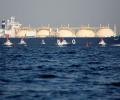
Tightening Russian gas supplies to Europe has led to scramble for tankers before winter sets in.

Experts suggest that a revamp in the surrounding infrastructure should take care of the issues plaguing the VB-2, stressing that the lightweight nature of the trains is what allows for higher speeds, and that needless design additions may hamper the train's efficiency.

In a first of its kind move, the Indian Railways Catering and Tourism Corporation (IRCTC), the ticket booking arm of the Indian Railways, is looking to monetise its bank of passenger data while conducting business with private and government companies. IRCTC has a large bank of data related to every online railway ticket ever generated as it is the country's only railway ticketing platform, an IRCTC official told Business Standard. The public sector undertaking, which has sought the services of a consultant to assist with the monetisation process, plans to raise Rs 1,000 crore through this exercise.
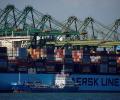
The Ministry of Ports, Shipping and Waterways has released a draft to amend the Indian Ports Act, 1908, which aims to bring in sweeping reforms in the sector by bringing non-major ports into the national fold, creating a new mechanism for resolution of disputes, and empowering maritime state development council (MSDC). The draft bill will see comments from stakeholders before being tabled in Parliament. "The Indian Ports Act, 1908 is more than 110 years old. It has become imperative that the Act is revamped to reflect the present-day frameworks, incorporate India's international obligations, address emerging environmental concerns, and aid the consultative development of the ports sector in the national interest," the shipping ministry said.
Buoyed by higher demand for crude oil and imported coal, Indian ports recorded a growth of 11 per cent in traffic during the April-June quarter of 2022-23. This shows that the economy is opening up, a report by DAM Capital said. The volume increase assumes significance since both prices of crude oil and imported coal have been soaring this year. Indian coal companies were pressed for supply amid a thermal coal crisis earlier in the year.
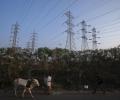
Two years after the Centre's flagship village electrification scheme Saubhagya concluded with the government claiming 99.9 per cent success, several states have added close to 1.1 million rural households that remain to be connected to the electricity grid. This new list includes earlier unwilling households that have now agreed to have a metered connection and also those built or discovered in the states' surveys since 2019. Assam and Uttar Pradesh are the states that have the majority of such new additions.
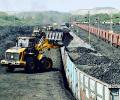
Eleven bidders, including Adani Enterprises, have shown interest in the first-ever coal import tender issued by national miner Coal India (CIL). Recently, state-owned NTPC awarded 6.25 million tonnes (mt) of imported coal tender worth Rs 8,300 crore to Adani Enterprises. CIL, in a public statement on Tuesday, said: "The prominent Indian agencies among them (11 coal importers) were Adani Enterprises, Mohit Minerals, and Chettinad Logistics. "A couple of coal exporting agencies from abroad, including one from Indonesia, have also shown interest," it said.
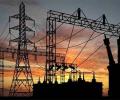
With the cooling down of heatwaves as the monsoon spreads across the country, power demand has fallen by 12.5 per cent from the start of this month till Monday. Peak power demand of the country had touched a record of 210 Gw last week, mostly due to rising temperatures and opening up of the economy. Compared with the beginning of this month, almost all states have seen a fall in power demand. Punjab, however, is an exception where the power demand on Monday was 17 per cent higher than on June 1.

Even as Union ministers allay misgivings over Agnipath, figures show a meagre 2.4 per cent of the ex-servicemen who applied for a government job could get one as the Centre and the states have been unable to recruit against the reserved quotas. Public sector undertakings (PSUs), ministries, and officials of Sainik Boards have blamed it on the lack of skill among ex-servicemen. They say veterans' inability to qualify in selection exams is one of reasons for this. Also, non-recognition of qualifications obtained from the military are reasons why their recruitment has remained significantly low, pushing them towards low-skill jobs.
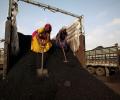
Coal production by Coal India (CIL) has grown slower than the captive mines, awarded over the last six years. During 2020-22, production from the captive mines jumped by 38.5 per cent while CIL saw a tepid growth of 3.4 per cent, according to government data. In terms of dispatch to the power sector, captive mines have raced ahead, witnessing a growth of 72 per cent compared to 15 per cent for CIL. For the current fiscal year, CIL's production is expected to be around 565 million tonnes.
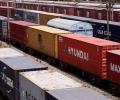
This alternative is being planned as the existing projects continue to be delayed due to land acquisition troubles. The ministry is thinking of adding new track lines to its existing eastern and western DFCs passing major areas in the proposed stretches, senior officials said.

The Union ministry of coal, while acknowledging that domestic coal stock is not enough to meet the power demand, asked state governments and the power generating companies (gencos) to import coal before monsoon season sets in. The ministry has warned the gencos if they do not import coal for 10 per cent blending in their fuel demand by the end of this month, blending benchmark would be increased to 15 per cent. The order pertains to all - central, state and independent power producers (IPPs)/privately owned units.
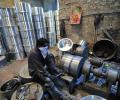
With the Covid-19 pandemic showing signs of ebbing and economic activity picking up, factory owners in Jalandhar had hoped that the worst was over. However, the heat wave in April and extensive power cuts that came with it, have crushed their hopes. The city's large number of micro, medium and small enterprises (MSMEs) are now gearing up for yet another struggle, this time to survive with the shortage of power that is severely impacting their operations.

The Indian Railways has decided to not cancel any more passenger trains to accommodate more freight traffic for coal transport. It will also gradually restore the ones it cancelled recently. The national transporter is of the view that coal supply is now reaching normative levels and does not need any more special measures. "Early data suggests that coal supply has stepped up since the passenger trains were cancelled.
Hit by Covid waves and slowdown, the Indian Railways has still not been able to return to its pre-pandemic passenger traffic, data by ministry of Railways has revealed. In February, the national transporter received 413 million ticket bookings - 43 per cent higher than the previous year, but only 61 per cent of the 675 million in February 2020. According to the statistics, that was the last time the Railways saw more than 500 million bookings in a single month.
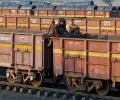
Amid rising demand for coal freight and an aggressive push towards diversifying its freight basket, Indian Railways is planning to buy 100,000 more wagons over the next three fiscal years. The procurement plan will majorly comprise BOXN wagons, which are used to transport coal, said a senior Ministry of Railways official. Notably, the railways recently floated a sizeable tender worth Rs 35,000 crore of wagons, which had been in the pipeline since 2018. "Our Budget Estimates for freight increase were conservative.

If 2019-20 (FY20) was an unusual year for highway construction in India, with the pace of work slowing down for the first time since the Narendra Modi government assumed power in 2014, largely due to the general elections in May and liquidity crunch, the outbreak of the Covid-19 pandemic in 2020-21 (FY21) only made matters worse with lockdowns and labour unavailability. The pace of highway construction in 2021-22 (FY22) has not been able to bulldoze the pandemic barriers in a year marred by two Covid-19 waves - the second at the start of the fiscal year, the third towards the close. With localised lockdowns and restrictions on mobility, highway construction growth in the country has now fallen to a five-year low.

As the Centre pushes reforms in the power sector, especially for the beleaguered electricity distribution segment, several states, especially those ruled by Opposition parties, are clamouring against it. Maharashtra, West Bengal, Tamil Nadu, and Kerela have voiced their reservations against the proposed amendments to the Electricity Act, 2003. The irony is the states opposing the amendments on the ground of threat of privatisation already have private partnerships in power supply. The proposed Bill was slated to be placed on the floor of Parliament in the Monsoon session. But it still awaits Cabinet approval amid several states complaining that they have been not consulted on the issue.
 © 2025 Rediff.com - Investor Information - Advertise with us - Disclaimer - Privacy Policy - Sitemap - Feedback - About us - Terms of use - Grievances